


 Clicks:1281
  Category:
Industry Information
Category:
Industry Information 
In the coffee industry, roasting is the most attractive link. The green coffee beans have almost no flavor at all. If you taste it directly, there will be an unpleasant vegetable taste, but after roasting, it turns into an incredibly aromatic and complex flavored cooked coffee beans. The smell of freshly roasted coffee beans is refreshing and it tastes delicious.
Coffee will undergo a series of different chemical reactions during roasting, many of which will reduce its weight and of course cause moisture loss. Slow roasting (roasting in 14-20 minutes) will have a higher weight loss ratio (about 16%-18%). Fast roasting can be completed in 90 seconds at the fastest. For a relatively expensive cup of coffee, the slow roasting method Will show a better flavor.

▎Sugar in coffee
Many people refer to sweetness when describing coffee flavor. It is very important to understand what happens during roasting to produce these natural sugars.
Green coffee beans contain a certain amount of monosaccharides. Although not all sugars have a sweet taste, these monosaccharides usually have a sweet taste and react easily under the catalysis of coffee roasting temperature. Once most of the water in the coffee beans evaporates, the sugars will start to react differently with the heat, and some will produce caramelization, causing some coffee beans to have a caramel-like tonality. It should be mentioned in particular that the sweetness of caramelized sugars will be reduced and eventually turned into one of the sources of bitterness; in addition, some sugars will interact with the protein in coffee beans to produce the so-called Maillard reaction ( Maillard reactions), which also include the browning of meat in the oven and the discoloration of cocoa beans during roasting.
When the coffee passes through the first burst stage, the monosaccharides are almost completely absent. They may all participate in various chemical reactions and finally turn into more different types of coffee aroma compounds.
▎Acid content in coffee
Coffee beans have many sour flavors, some taste pleasing, some are not so delicious. For the roaster, the most important acid is chlorogenic acids (CGAs). When roasting coffee, a key goal is to completely remove the unpalatable acids, while avoiding the creation of more negative flavor factors, while retaining more pleasing aroma components. In addition, some acids will remain stable after roasting, such as quinic acid, which adds a pleasant, clean coffee flavor texture.
▎Aromatic compounds in coffee
Where does the aroma of coffee come from?
Unroasted coffee beans do not have any significant aroma. They can only produce a variety of aromatic compounds through roasting, and therefore produce a distinctive aroma of coffee, but most people’s cognitive abilities I think are aroma, because the mouth can feel it Only the sweet and sour bitter fish scent can be there. When the receptor of the nose feels the aroma and merges with the taste buds, it is the flavor that people feel.
But I think the complex aroma is related to the organic chemical composition of the raw beans. The compounds that cause different aromas will be displayed in the raw beans with different concentration values, including the type, the climate of origin, the ripening of the fruit, the solution, etc. , Both are harmful to the organic chemical composition of both raw beans.
The aroma-producing chemicals are made up of sugars, proteins and acids with different characteristics. They penetrate the baking process (very caramelization) to convert this chemical into a fragrant molecular structure. Different compounds will cause different sensory characteristics during baking, and the intensity of the baking level will deepen the aroma that people feel.
The aroma of most coffee comes from three major reactions when coffee is roasted: Maillard reaction, caramelization reaction and Strecker degradation (another reaction related to amino acids). These reactions are catalyzed by heat during coffee roasting, and finally produce more than 800 different volatile aromatic compounds, which are the source of coffee flavor.
Although the types of aromatic compounds in coffee are recorded much more than those in wine, the same coffee bean only possesses some aromatic compounds. Many people want to artificially synthesize the aroma similar to the real coffee that is freshly roasted, but they can only end in failure.
2-methylpyridine exhibits roasted aroma
Pyrazine can cause a dry fruit flavor, such as 2,3-dimethylpyrazine. Or burnt taste, such as 2-ethyl-3-methylpyrazine.
The longer the baking level, the caramelization of the sugar. This causes furans and furanones, such as 4-hydroxy-2,5-dimethyl-3(2H)furanones, which have a caramel flavor.
The dissolution reflects the whole process, and the dissolution of carbohydrates in the substituted hydrocarbons will also cause volatile compounds that cause aroma. 3-Methyl phthalic anhydride causes fresh fragrance and sweetness.
Macrolides are also very fragrant, which is the result of automatic air oxidation of oleic acid such as toluene. Ketones generally cause fresh fruity or musty taste (β-Malaysian ketone is a ketone with the taste of fresh fruit tea), while the unsalted butter taste is caused by the smaller large ring
Esters such as 2,3-butanedione. The whole baking process can also cause a very slow taste. Phenols such as guaiacol are caused by the dissolution of mineral acid and phenolic acid during the whole baking process. They cause a noticeable smoky smell.
How is the aroma felt by people?
People now understand how certain volatile compounds are produced during the whole roasting process of coffee. But be aware that the aroma will be felt in a different way.
It is estimated that more than 900 kinds of aromatic volatile compounds will be created during the whole baking process, but only about 30 of them can be recognized as flavor and aroma, and people cannot feel most of the compounds. This compound must also remain stable in people's hands and be able to get special sensory feelings.
When you smell coffee powder, the aroma molecular structure will interact with people's taste protein kinase at will. When coffee powder is in contact with water, other molecular structures will be dissolved out, giving us a different sensory experience.
Fabiana Carvalho is a neurobiologist who specializes in the study of human memory, perception and cognition of the nervous system. She expressed that there will be an adjustment of the compressive strength of the flavor between the equilibrium of the compound. Fabiana gave an example of the experiment. The experiment showed that when the strawberry sprout was added to the soft white sugar solution with the same sugar content, the testees would find this cup of coconut water sweeter.
Penetration grasps how aroma is produced and what others perceive. People can penetrate news and information to distinguish how people break through their favorite coffee, and can identify different links of purification that will result in very different flavors and aromas.
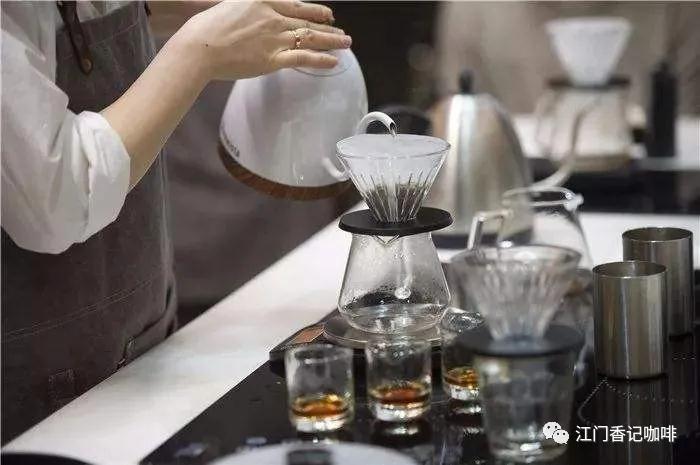
We can try different brewing methods, or use different extraction methods to feel the flavor characteristics of coffee.