


 Clicks:1553
  Category:
Company News
Category:
Company News 
The simple form of coffee is to combine ground coffee powder with water. Whether the coffee we drink is sweet or bitter, delicious or difficult to swallow, the key to determining these tastes depends on the quality of the coffee beans, the water used, and the method of combining them. The combined method can be further divided into: grinding thickness, brewing time, water temperature, brewing utensils, etc.
And of course it also includes the "powder to water ratio", as the name suggests is the ratio of coffee powder to hot water, which affects the intensity and taste of the coffee.
In the case of established coffee beans, the six major factors that affect the quality of a cup of coffee, in order of importance are:
First important: Water Quality
Second important: ratio of powder to water (Ratio)
Third important: Grinding degree (Grind), brewing time (Time), water temperature (Temperature)
Fourth important: Stirring/turbulence (Turbulence, which is the way coffee control often communicates)
— — Why is powder-water ratio important? — —
The flavor of coffee will change due to the brewing recipe. The recipe for brewing coffee is just like the recipe for baking a cake. The amount of each material used will affect it. As long as you increase or decrease the amount of water or coffee, you can change the flavor, viscosity, etc. . Because of this, many baristas or sophisticated people use scales and timers to assist when making coffee.
For example, some people use 50 grams of powder per liter of water to make coffee for multiple people at a time. But some people talk about a fixed ratio, such as 1:14 (14ml water/per gram coffee powder) or 1:16 (16ml water/per gram coffee powder)
Regardless of the ratio of powder to water, most people try to maintain the consistency, which means that the brewer can present his brewed coffee in a more efficient and predictable way. At the same time, if he wants to show a certain taste, Also know how to adjust the brewing recipe.
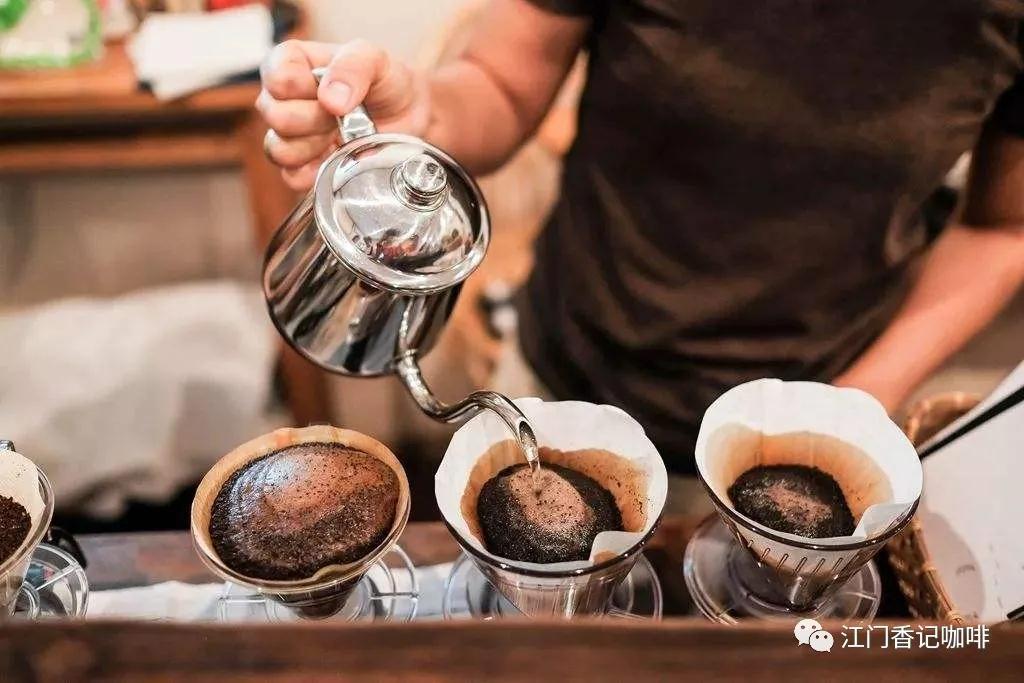
— — The concept of ratio — —
In coffee brewing, the powder-to-water ratio refers to how many grams of coffee powder is used, compared to how many grams (or milliliters) of brewing water. 1000ml of water weighs ≈1000g, so in the actual brewing operation, we will use an electronic scale to weigh the water, so as to accurately define the value of the powder-water ratio. For example, the 1:15 powder-to-water ratio is usually based on 1 gram of coffee powder and 15 grams of brewing water. If you use 15 grams of coffee beans to grind into powder for brewing (and the grinder If there is no residue in it), then as long as the amount of water injected is 225g (±1g), the effect you want will be. Of course, a more accurate way to weigh coffee powder is to clear the electronic scale before pouring the coffee powder into the filter cup, and the total brewed coffee powder weight can be accurate to 0.1g.
— — The relationship between powder water ratio and brewing time/extraction rate/concentration — —
When beans, water quality, grinding degree, water temperature, and turbulence (brewing technique) are fixed, the ratio of powder to water is positively correlated with brewing time. For the same amount of powder, the more water used, the longer the brewing time required, and the less water, the shorter the brewing time.
When the beans, water quality, grinding degree, water temperature, and turbulence (brewing technique) are fixed, the ratio of powder to water is positively correlated with the extraction rate. For the same amount of powder, the more water used, the higher the extraction rate, and the less water, the lower the extraction rate. (The concentration of coffee is increasing during the brewing process)
When beans, water quality, grinding degree, water temperature, and turbulence (brewing technique) are fixed, the ratio of powder to water is negatively correlated with concentration. For the same amount of powder, the more water used, the lower the concentration, and the less water, the higher the concentration. (The concentration of coffee shows a decreasing relationship during the brewing process)
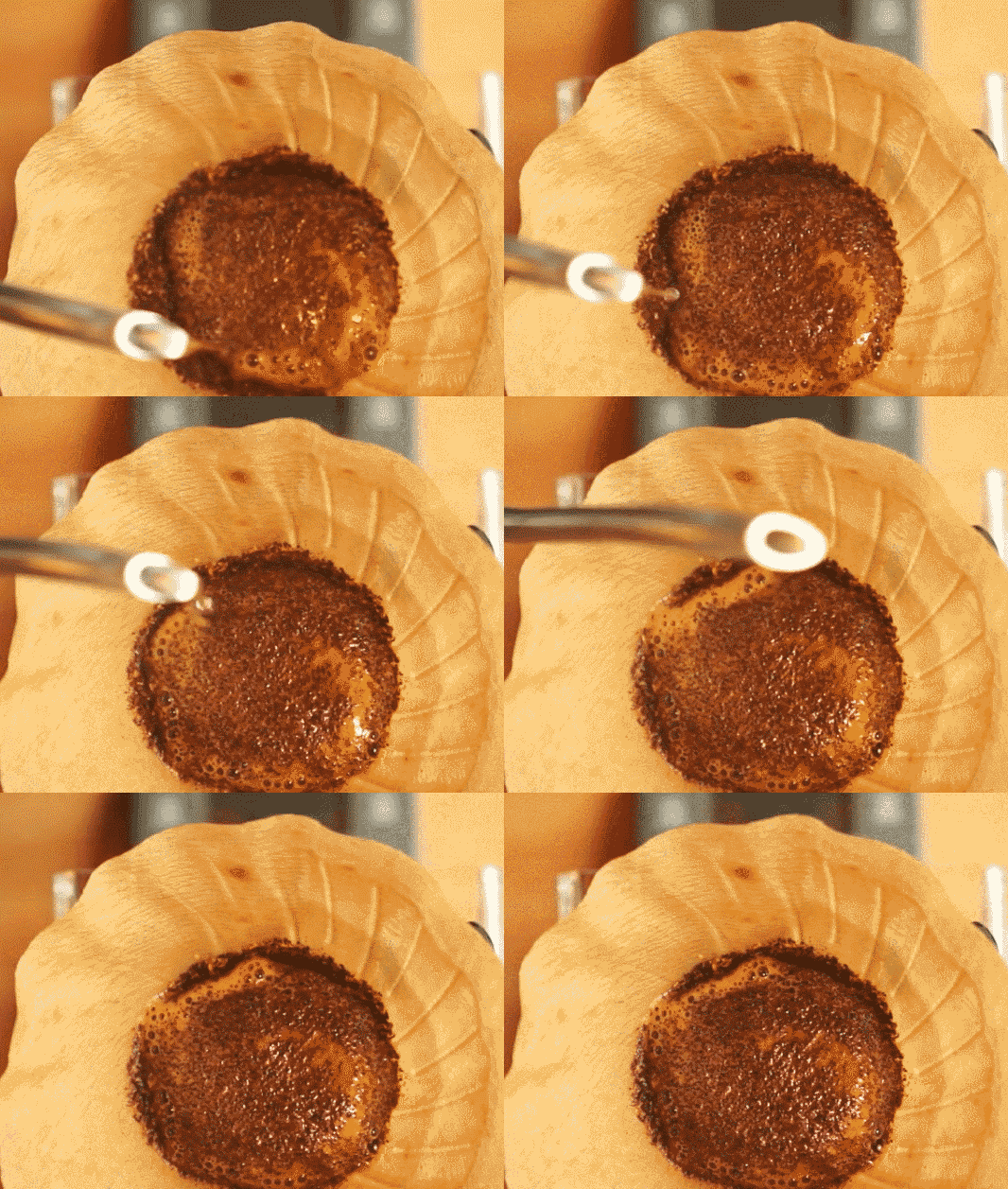
— — Powder to water ratio and coffee flavor performance — —
In the process of coffee brewing, there is a "coffee extraction flavor syllogism". From the beginning to the end of coffee brewing, as the amount of water increases and time goes by, the first stage extracts aromatic substances and acids, and the second The stage is sweetness and caramelized substances, and the third stage is bitterness, astringency and other negative flavors, so we can control the powder to water ratio to express the flavor of coffee. With the same amount of coffee powder, less water is used (such as 1:12 powder-water ratio), the extracted coffee flavor is close to the previous flavor (sour to sweet), and too much water is used (such as 1:20 powder Water ratio), the bitterness/astringency is easily washed out.
— — How to find the right powder to water ratio — —
In general, coffee beans are of excellent quality (for example, good quality beans with a market price of more than 200 yuan for half a pound, such as Geisha), which is suitable for high powder-to-water ratio (1:16-1:18); general For high-quality beans (the market price of half a pound is about 100 yuan), it is recommended to use a powder-water ratio of 1:13-1:15; ordinary commercial beans, if you want to rinse, can be eaten without bitterness, it is recommended to use 1:10-1:12 Powder-water ratio to flush (after flushing, add bypass water to adjust the concentration, see the detailed article, add "bypass water" after brewing, will coffee taste better?). For beans with poor freshness (for example, after three months of roasting), the good flavor of the coffee is almost gone, so try to use a ratio of 1:8-1:10. If the original beans are of high quality , The sweetness will still be preserved, and by adding bypass water to adjust the concentration, you can also drink good coffee.

Coffee powder water ratio is certainly important, but there are still some factors to consider: water quality, grinding particle size distribution, water temperature and even water injection method, etc., there are too many variables.
If the coffee does not taste right, try to adjust one of the variables at a time without changing the others. The easiest thing to adjust is the grinding thickness:
If the coffee is too sour, salty or too thin, grind it finely. This will increase the surface area contacted by the water, thereby increasing the extraction rate, making the coffee closer to the result of sweetness and flavor.
If the coffee is too bitter, grind it coarser. This reduces the surface area contacted by the water, reduces the extraction rate, and prevents excessive bitterness from being released during brewing.
Remarks: The extraction rate (the speed at which the coffee powder is released during brewing) and the brewing time (the total time the water is in contact with the coffee powder) sound a bit similar, but they actually mean different things. Be careful not to be confused.
Brewing good coffee is not that simple, especially the drip-type brewing method, because the drip-type changes are too many. But as long as you can control the cause of change, it is worth it, because you can drink the flavors written on the bean bag, such as jasmine, red apple, raspberry or honey.
When you control the extraction of coffee well, it means that you have used the appropriate powder-to-water ratio, grind thickness, etc., to achieve the sweet spot we pursue.
- The end -
*This article is compiled and edited by "Coffee Boutique Life". If there is any error, please leave a message. Some pictures and articles are from the Internet. If there is any infringement, please contact the staff to delete, thank you!